
Tile Match Pro
Gimica GmbHPuzzle
4.31.24K Reviews
- Version
- 1.23.0
- Installs
- 1.00M
- Age Rating
- Everyone
Screenshots
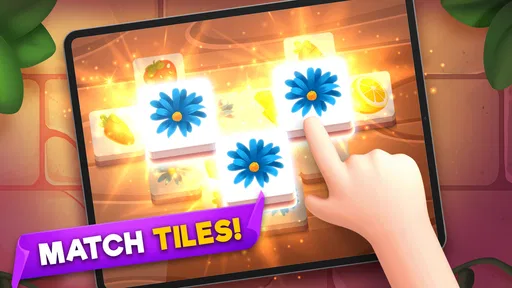
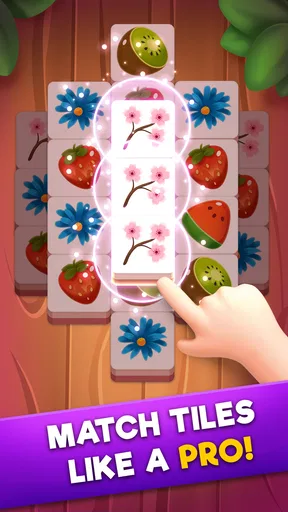
Our Review of Tile Match Pro
 Analysis by Appyee
I enjoy puzzle games that are easy to understand but still give me a reason to think before making a move. Tile Match Pro, a free tile-matching game from Gimica GmbH, fits that mood well. Its basic appeal is immediate: look at the available tiles, find matching groups, and clear the board with enough care to avoid creating a dead end. The store summary calls it “Match Like A Pro,” but what matters in practice is whether the simple loop stays comfortable over repeated sessions.
My overall impression is that this is best treated as a relaxed, short-session puzzle game rather than a deep strategy title. It is suitable for Everyone, works on Android 7.0 and later, and has reached more than a million installs. That gives it a broad audience, but popularity alone does not make every match-3 or tile game a good fit. The important question is whether you want a calm board-clearing routine, how much tolerance you have for monetization, and whether you prefer a game that rewards planning over speed.
How Tile Match Pro feels in everyday play
The first thing I noticed is how little preparation the game demands. You do not need to learn a complicated control scheme or remember a long story before starting. The central action is visual: scan the board, identify useful matches, and decide which move protects your next few options. That makes it a natural choice for a short break, especially when I want something more engaging than scrolling but less demanding than a full-length game.
A realistic use case is a few minutes while waiting for an appointment or during a commute. I can begin a puzzle without setting aside a large block of time, then stop after a board or two without feeling that I have abandoned a complicated campaign. The same simplicity also makes it approachable for someone who rarely plays games. The Everyone age rating supports that broad accessibility, although younger players may still need guidance around optional purchases.
The game belongs firmly in the puzzle category, and its strongest quality is the way it turns familiar matching into a sequence of small decisions. A careless choice can remove a tile that would have been useful later, while a more patient move can keep several possibilities open. That creates a modest but real layer of planning. I would not describe it as a demanding logic challenge, but it is more satisfying than tapping whatever match is immediately visible.
One useful habit is to avoid clearing the first attractive combination automatically. I look across the whole arrangement first and check whether one match blocks access to another. This is especially helpful when several groups seem equally convenient. The best move is often not the one that produces the quickest visual result, but the one that leaves the most flexible board afterward.
That approach also reveals the game’s main limitation. If you are searching for elaborate puzzles with multiple rule systems, narrative progression, or a strong competitive layer, this may feel lightweight. Tile Match Pro concentrates on its core matching activity instead of trying to become a large, feature-heavy game. I see that as a strength for casual players and a weakness for anyone who needs constant novelty.
Progress without turning every session into a project
Tile games often succeed or fail on how they handle progress. I want a sense that my decisions matter, but I do not want every session to feel like homework. In this case, the appeal comes from gradually becoming better at reading the board. I start to recognize risky moves more quickly, notice when a match should be postponed, and use the available space more deliberately.
That kind of improvement is easy to overlook because it is not the same as learning a complicated system. There is no need to memorize a large collection of abilities or build a specialized character. Instead, the progress is personal: I become more careful, faster at spotting patterns, and less likely to waste a useful tile. For a quiet puzzle game, that is a reasonable form of advancement.
The trade-off is that players who prefer visible rewards may find the experience less motivating than a game built around a large map, collection system, or competitive ranking. I would choose Tile Match Pro when I want the puzzle itself to be the main event. I would choose a more elaborate alternative when I need a stronger long-term objective or a sense of unlocking a world.
Another practical tip is to treat each board as a limited resource-management exercise. Instead of asking only, “What can I match now?” I ask, “Which match leaves the cleanest set of choices?” This changes the rhythm from frantic clearing to controlled planning. It is a small adjustment, but it makes the game feel more thoughtful and can help prevent the frustration of running out of useful options.
Players should also consider their preferred pace. Tile Match Pro works for people who like to pause and inspect a layout. It is less convincing for someone who wants constant action, rapid reflex tests, or a strong sense of urgency. The game’s satisfaction comes from observation and selection, not from speed alone.
Spending, pressure, and what I would watch
The game is free to download, but it includes in-app purchases priced from $0.99 to $12.99 per item. That is the key spending context a new player should understand before starting. The presence of purchases does not automatically make a puzzle unfair, yet it means I would approach the game with a clear personal limit rather than tapping through purchase prompts casually.
I prefer to decide in advance whether I am playing entirely without spending or whether I am comfortable paying for occasional assistance. That simple boundary matters in games built around repeated attempts, because a difficult moment can make a small purchase feel more urgent than it seemed at the start. For me, the fairest approach is to judge each board on its own and take a break when frustration begins influencing my decisions.
The purchase range is fairly broad, so the difference between a tiny optional payment and a larger one deserves attention. I would not assume that paying is necessary to enjoy the core puzzle, and I would not assume that every purchase has the same value. Before spending, I would read the exact description shown in the game and consider whether the benefit improves the experience or merely removes a moment of challenge.
This is also where the game may not suit everyone. If you want a completely purchase-free puzzle environment, a paid game with no optional transactions may be a better fit, even if its initial cost is higher. If you are comfortable with free games that offer optional spending, Tile Match Pro is easier to approach, but I would still keep purchase decisions separate from the emotional pressure of a difficult board.
For families, the Everyone rating makes the game broadly approachable, but the free price and in-app purchase range are still worth discussing with younger players. I would explain that the game can be played without treating the purchase screen as part of the puzzle. That conversation is more useful than simply relying on the age label, because age suitability and spending habits are separate issues.
Is the challenge fair?
Fairness in a tile puzzle is less about competitive matchmaking and more about whether the player feels that careful choices matter. My preferred standard is simple: I should be able to understand why a board became difficult, rather than feeling that success depends on an unexplained advantage. Tile Match Pro is most enjoyable when I can look back at a failed attempt and identify a questionable move.
That makes deliberate play important. If I rush through obvious matches, I cannot fairly blame the game when the remaining layout becomes awkward. I get a better experience by scanning before acting, preserving useful options, and accepting that not every move needs to produce an immediate gain. The game rewards that mindset more than impulsive tapping.
At the same time, I would not present it as a competitive fairness test in the same way as a multiplayer strategy game. The verified details identify it as a single puzzle title from Gimica GmbH, not as an esports-style contest or a skill leaderboard experience. My fairness judgement is therefore about the relationship between planning, difficulty, and spending pressure, not about whether every player faces an identical opponent.
For players comparing it with the usual alternatives, the distinction is useful. A classic offline puzzle may offer a more self-contained experience with fewer commercial interruptions. A match-three game may provide more dramatic effects and faster feedback. A pure brain-training app may be more structured and analytical. Tile Match Pro sits between these options: it is more game-like than a bare logic exercise, but simpler and quieter than a heavily layered arcade puzzler.
That middle position is its competitive advantage. I can recommend it to someone who wants a familiar tile activity with enough decision-making to avoid becoming completely automatic. I would be more cautious with a player who values transparent difficulty design above all else or who dislikes any connection between free access and optional purchases.
What I would check before committing time or money
The current version is 1.23.0, and the game was released on October 2, 2023. Those details help place the app in context, but they do not by themselves answer every practical question a player may have. Version numbers change, and a release date does not tell me how a particular session will fit my preferences. I would use the game for a while before deciding whether it deserves a permanent place on my phone.
I would also avoid assuming that a high number of installs guarantees a personal match. Tile Match Pro has an average rating of 4.3 from roughly ten thousand ratings, with about one thousand two hundred written reviews. That suggests a substantial audience and generally positive reception, but averages compress many different expectations into one figure. A casual player may be satisfied by the same simplicity that disappoints someone looking for advanced puzzle mechanics.
One question I would answer through personal testing is whether the game’s rhythm stays enjoyable after the novelty fades. The opening appeal of matching tiles is clear, but long-term value depends on how much variety the boards provide and how comfortable the progression feels. I would not make a purchase simply because the first few sessions were pleasant. I would first decide whether I still enjoy the decision-making when I am no longer learning the basic loop.
Another question concerns device compatibility. Android 7.0 is the minimum operating system, so owners of newer Android phones should have a straightforward starting point from a system-version perspective. That does not guarantee identical performance on every device, and I would still pay attention to how the game feels on my particular screen. Tile visibility matters in a visual matching game; a layout that is comfortable on a large display may feel more crowded on a smaller one.
I would also ask whether the game fits my attention style. It is a good choice if I like inspecting patterns and making low-pressure decisions. It is a weaker choice if I need a strong narrative, social competition, or a constant stream of new mechanics to stay interested. Knowing that before installing saves more time than trying to force a simple puzzle game to provide the experience of a different genre.
My trust verdict for casual puzzle players
After looking at the game as both a puzzle and a free-to-play product, I see Tile Match Pro as an easy recommendation for a specific type of player: someone who wants accessible tile matching, short sessions, and a little more thought than simply tapping the first available group. Its free entry point, Everyone rating, and broad Android compatibility make it easy to try, while the respectable average rating and sizable audience suggest that the basic concept works for many people.
My recommendation comes with a spending boundary. I would play it free first, learn how the boards feel, and only then consider whether any optional purchase is worth it. The listed purchase range from $0.99 to $12.99 per item means the game should be approached with attention rather than automatic approval. The fairest way to enjoy it is to make spending a planned choice, never a reaction to frustration.
I would skip it if I wanted a fully transparent, no-purchase puzzle package, a rich campaign, or intense competition. In those cases, a paid standalone puzzle or a more strategic alternative may serve me better. I would also skip it if visual matching games quickly become repetitive for me, because the central loop is deliberately focused rather than expansive.
For everyone else, the game earns a place as a dependable casual option. My strongest practical advice is to slow down before each match, preserve future choices, and judge the experience over several sessions instead of one lucky board. That is where its modest strategy becomes visible. Tile Match Pro is not trying to be the biggest puzzle game on a phone, and I think it is more trustworthy when evaluated on what it actually offers: a simple, approachable matching routine with enough planning to make a short break feel worthwhile.
Verdict
Strengths of Tile Match Pro
- Simple tap-and-match gameplay is easy to learn for players of all ages.
- Short levels make it convenient for quick breaks or casual play sessions.
- Colorful tile designs make the board easy to read on smaller screens.
- Gradually increasing difficulty provides a steady challenge without being overwhelming.
- Offline play may be convenient when you have limited or no internet access.
Limitations of Tile Match Pro
- Repeated matching patterns can become predictable after extended play.
- Later levels may feel frustrating if planning several moves ahead is required.
- Frequent ads can interrupt the flow, especially between completed levels.
- Limited variety in objectives may reduce long-term appeal for some players.
- Optional purchases may be needed to access extra hints or remove interruptions.
Other Releases by Gimica GmbH
View All


Similar Picks in This Category
View All
Block Blast!
HungryStudio4.8

Braindom: Brain Games Test
Lahana Game Studio4.6

AMAZE!
CrazyLabs LTD4.6

Sudoku - Classic Sudoku Puzzle
Oakever Games4.7

Art Puzzle - Puzzle Games
Easybrain4.8

Amaze GO!
Oakever Games4.9
Frequently Asked Questions
What is Tile Match Pro and how do you play it?
Tile Match Pro is a tile-matching puzzle game in which you select identical tiles from a layered or crowded board and place them into a limited tray. Matching three equal tiles removes them and clears space for new moves. The basic rules are easy to understand, but later levels usually require careful planning, because selecting the wrong tile can block useful combinations and leave the tray full.
Is Tile Match Pro free to download and play?
Tile Match Pro can generally be downloaded and played without an upfront purchase, making it accessible to casual players. However, the free version may include advertising, optional in-app purchases, or paid items such as hints, boosters, extra lives, and the removal of ads. Before downloading, check the current store listing for the exact pricing, subscription details, and available purchase options.
Can Tile Match Pro be played offline?
Many of the standard tile-matching levels can often be played without a continuous internet connection, which makes Tile Match Pro suitable for short sessions while traveling or when mobile data is unavailable. Nevertheless, an internet connection may still be needed for advertisements, cloud synchronization, events, updates, purchases, or leaderboard features. Offline availability can vary by version and device.
Does Tile Match Pro contain ads or require in-app purchases?
Tile Match Pro may display advertisements between levels or when you choose to receive optional rewards. It may also offer in-app purchases for boosters, hints, additional attempts, or an ad-free experience. These purchases are not usually necessary to understand the core gameplay, but they can make difficult stages more convenient. Review the app’s store page and device purchase settings before allowing transactions.
Is Tile Match Pro suitable for children and all age groups?
Tile Match Pro is generally easy to learn and does not usually require advanced reading or complicated controls, so it can appeal to children, teenagers, and adults. Parents should still review the age rating, advertising content, privacy information, and in-app purchase settings before installation. If children use the device, enabling purchase restrictions is recommended to prevent accidental spending.
Play our best games!


